$20.00
We will hold your cart for 15:00.
You've watched the reviews, compared the prices, and narrowed it down to two or three paddles. But before you hit “add to cart,” take a breath. A pickleball paddle is an investment in your game, and the wrong one can cost you cash and confidence on the court.
That's why we've built this pre-purchase checklist—the same one we use when we test gear at Dink & Drive. Run through these 7 points, and you'll walk into your first match with a paddle that feels like it was made for you.
Paddle weight is the most underrated spec on the spec sheet. It affects everything from swing speed to hand fatigue. Most paddles fall between 7.5 and 8.5 ounces.
If you have tennis elbow or shoulder issues, gravitate lighter, not heavier. You can always add lead tape later—you can't remove weight.
Grip size isn't just about comfort; it directly affects your wrist action and spin production. A grip that's too big restricts wrist snap; too small makes the paddle twist in your hand.
Here's a quick test: hold the paddle with your dominant hand, and see if you can slide your other index finger between your fingertips and your palm. It should fit snugly—if it's tight, the grip is too small; if it slides easily, the grip is too big.
Most players are best served by grips between 4 1/8 and 4 3/8 inches. Beginners often gravitate to smaller grips for easier wrist movement, while power players might prefer a thicker grip for stability.
If you plan to play in USAP or UPA-A sanctioned events, check if your paddle is on the approved list. Using an unapproved paddle can get you disqualified from a match before you even hit a ball.
USAP maintains an approved list that's updated frequently. UPA-A has its own list, and some paddles are approved for both. When in doubt, look for the approval logo on the paddle face or the product page—and check the date. A paddle approved in 2023 might not cut it in 2026.
Regular recreational play? Anything goes, but if you're buying a premium paddle, it's worth paying for compliance now so you don't have to buy again later.
Paddle cores come in three common thicknesses: thin (10–12mm), medium (13–14mm), and thick (15–16mm), with variations in between.
Your core thickness choice also impacts durability. Thinner cores are more prone to breakage if you're a hard hitter, so factor that into your decision.
The paddle's silhouette changes how it plays. Elongated paddles give you extra reach and leverage, but they have a higher balance point, making them feel tip-heavy. Standard or wide-body paddles offer a larger sweet spot and better control, but you may sacrifice some reach.
If you're transitioning from tennis or looking to generate spin by snapping your wrist, an elongated paddle might be your ally. If you're a consistent, finesse-oriented player who values above all else the ability to hit from the kitchen, a standard shape with a lower balance point could be safer.
Also consider the paddle's balance—head-heavy paddles produce power, while handle-heavy paddles are more maneuverable. Most manufacturers list this spec; if they don't, ask.
The face material does more than look good. It dictates the paddle's feel, spin potential, and longevity.
Now, here's the thing: texture. A rough face grips the ball for extra spin, but it's also subject to wear. Some textured paddles lose their grit within months. If spin is your game, choose a paddle with a “raw” or “textured” carbon face, and consider using a spin-enhancing spray to keep the grit alive.
Pickleball paddles range from $30 to $300+. But more expensive doesn't always mean better for your level. Here's a rough breakdown:
Don't blow your budget on a pro paddle if you're still learning to dink. A mid-range paddle is easier to control, and you'll improve faster with a balanced tool. Save the money for lessons or a clinic.
We've put the checklist into practice with three paddles from brands we trust. Here are our top picks, each passing every check for its target player.
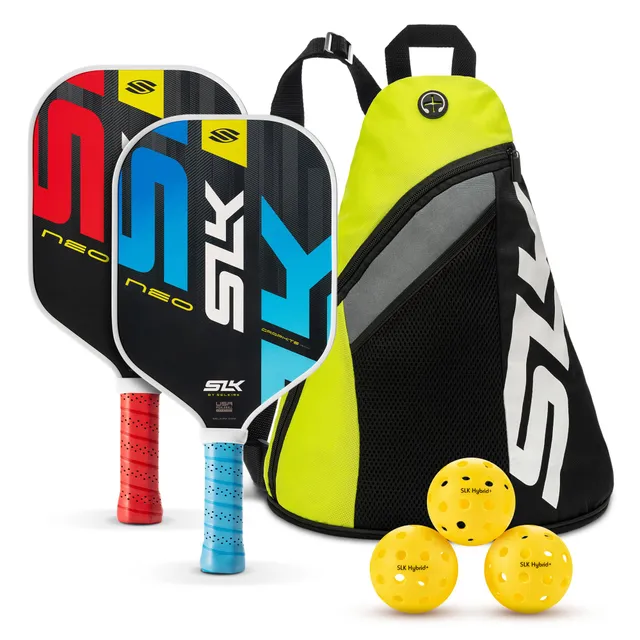
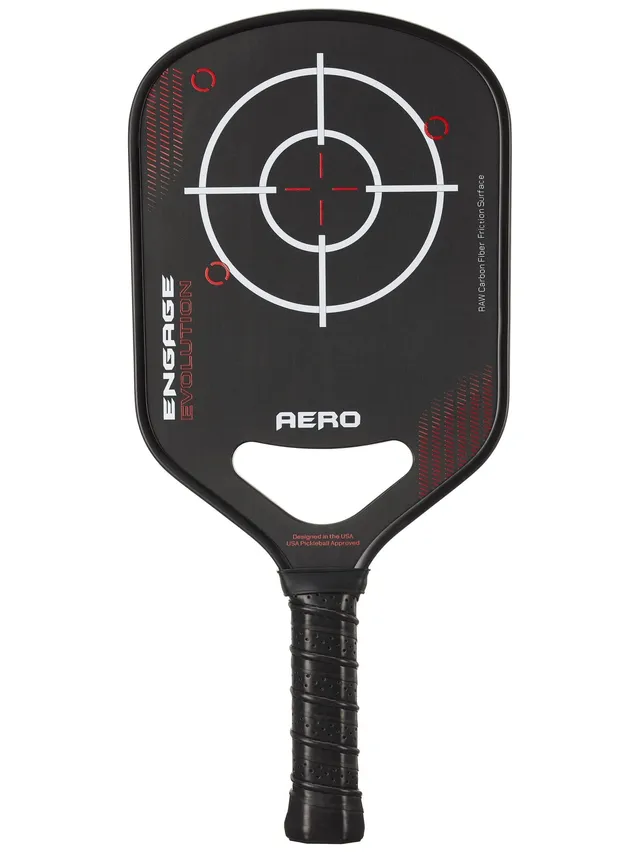
For a beginner, the SLK Neo 2.0 (two-player set) offers a comfortable 7.6–8.0 oz weight and a 4 1/4 grip, with a wide-body shape that maximizes the sweet spot. It's USAPA approved, so you can carry it straight into league play. The Engage Evolution Aero is another intelligent entry point: lightweight, easy-swinging, with a raw T700 carbon face that generates surprising spin, all under $50. And the Gearbox G5 brings edgeless carbon construction to a mid-range price, with a 15mm core that softens impact for those prone to arm fatigue.
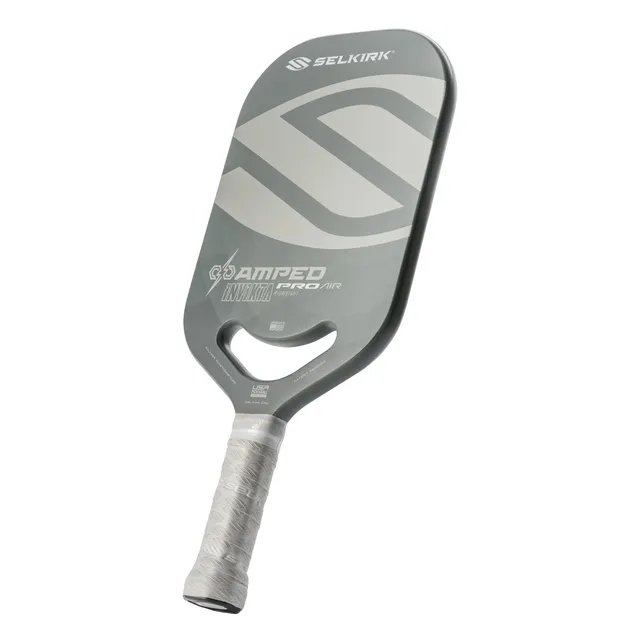
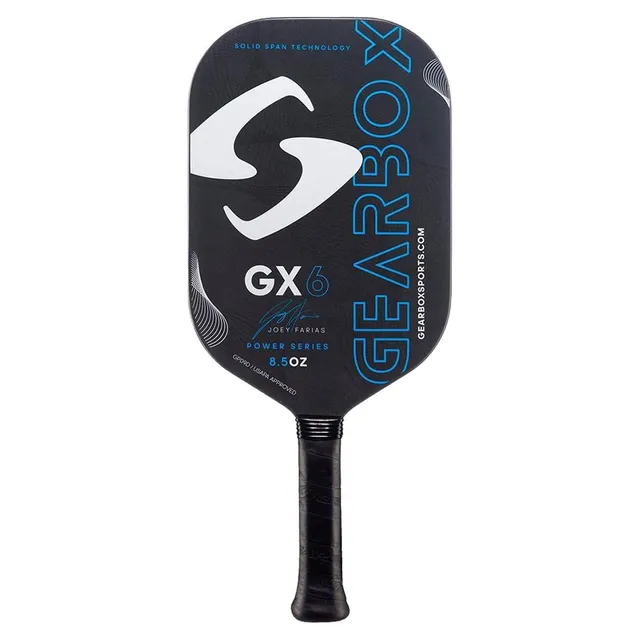
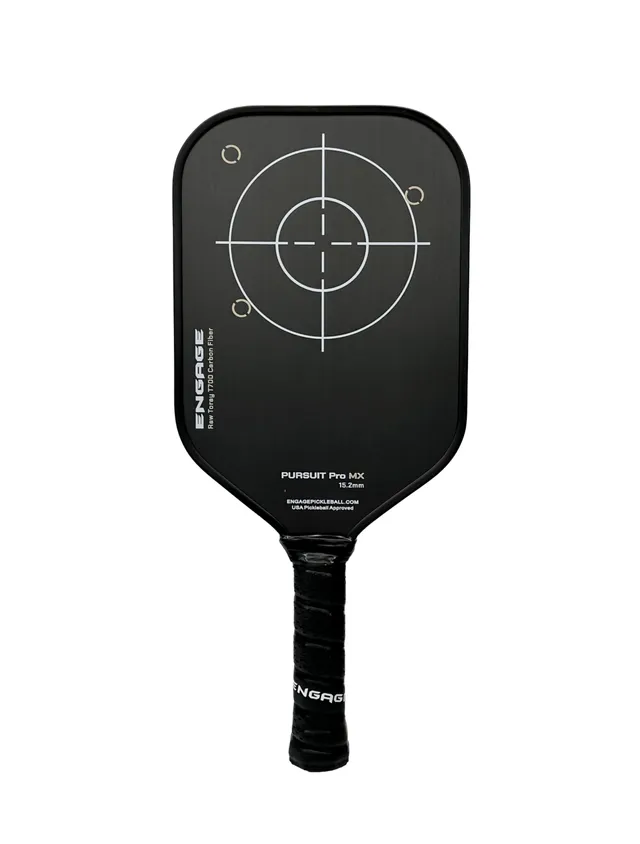
If you're solidifying your game, the Selkirk Amped gives you a composite feel with its X5 core, balancing control and power, and at 8.0 oz it's a traditional all-court weight. The Gearbox GX6 is a step up in tech: its 16mm SSTCORE is smooth, quiet, and durable, with a 4 1/8 grip that many intermediates prefer for spin. The Engage Pursuit Pro MX is an elongated control paddle with a 16mm core—ideal for those who want to develop a patient, dink-heavy game. All are UPA-A approved and built to last.
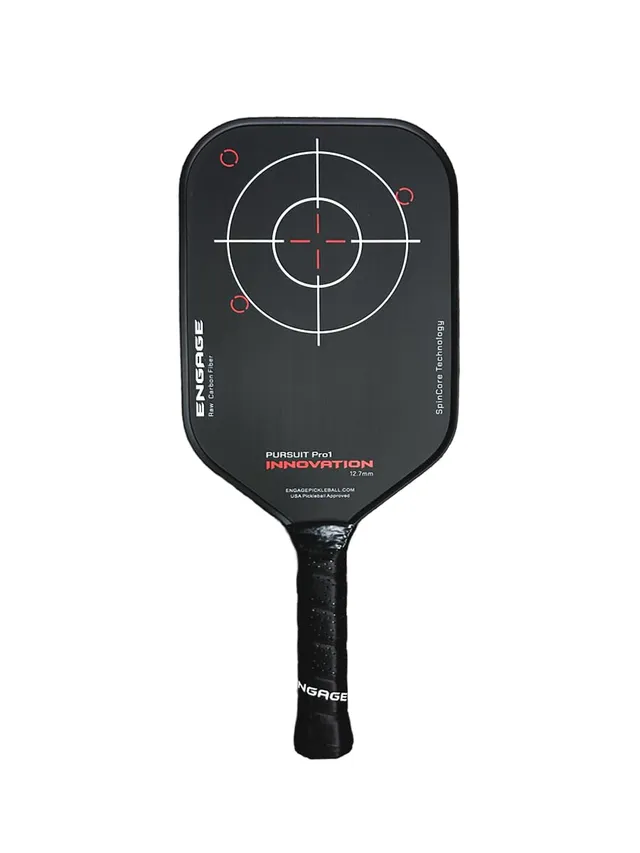
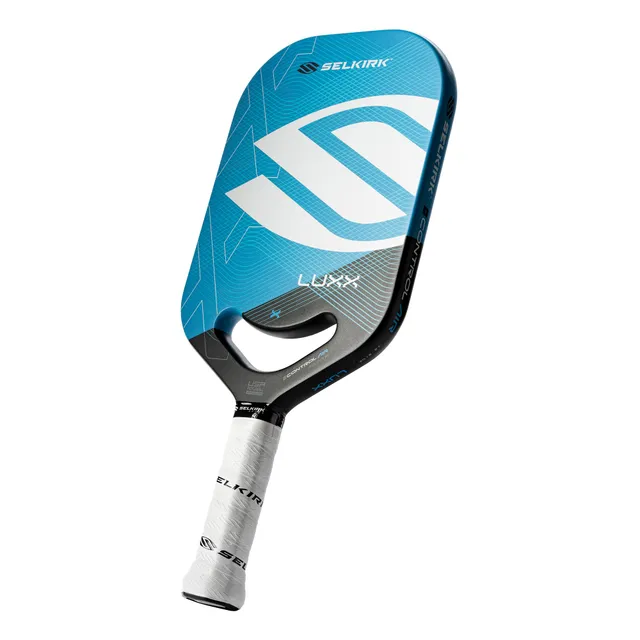
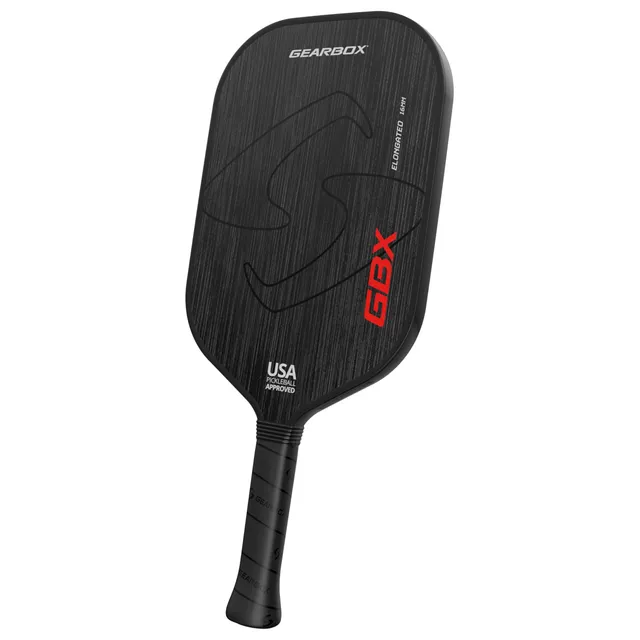
For those who want nothing less than elite performance, the Engage Pursuit Pro1 lives up to its name—a raw carbon face with SpinCore technology, 12.7mm core for explosive power, but still keeps a 4 1/2 grip for added spin. If you prefer a touch more control from a premium build, the Selkirk LUXX Control is a 16mm masterpiece that delivers precision placement and could become the trusty companion of a crafty point constructor. And the Gearbox GBX, with its Toray T-700 carbon surface and 13mm polypropylene core, offers a seamless blend of pop and feel that advanced players expect. All three are tournament-legal and crafted from aerospace-grade materials.
A paddle is only half the setup. You'll also need balls that match your playing surface, a bag to carry your gear, and eye protection if you play doubles with aggressive hitters.
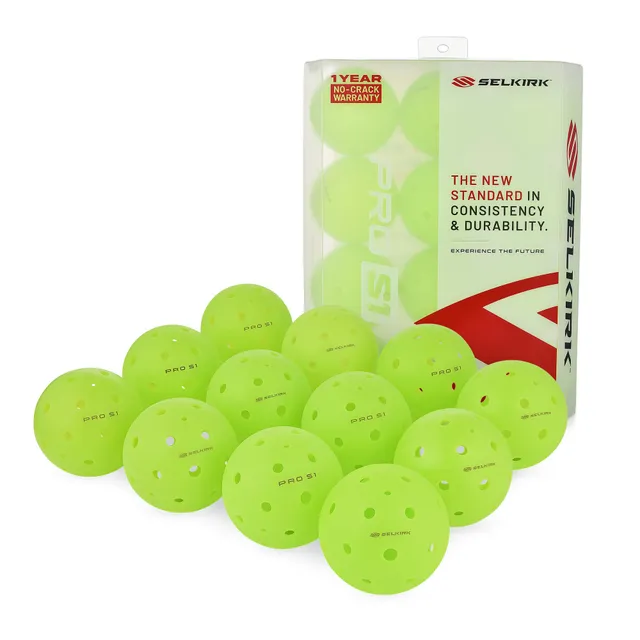
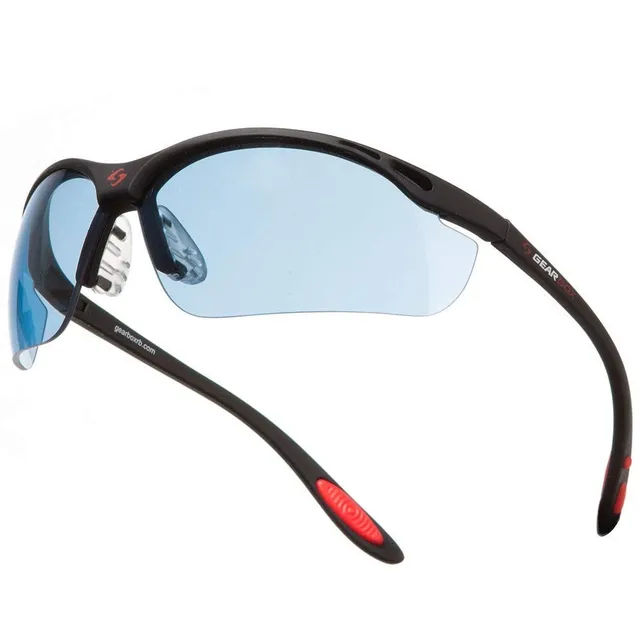
Look for USAPA-approved outdoor balls that hold up to hard hits; a cracked ball can ruin a good rally. A good bag will protect your paddle during travel and give you room for water, extra grips, and a change of shirt. And if you wear glasses, consider investing in protective eyewear with an ASTM F803 rating—your eyes will thank you.
The Selkirk Pro S1 is a USAPA-approved outdoor ball known for its consistency and durability—a 12-pack keeps you stocked for months. The Gearbox Vision protective eyewear is a comfortable, anti-fog solution with a hard case, and it's certified to ASTM F803 standards, so it's ready for tournament play.
Buying a paddle is a personal decision, but it shouldn't be a gamble. Run this checklist on every option you're considering:
If a paddle passes all seven, you've found your match. If it fails one, you'll know why you're hesitating.
Still torn? Reach out to our team—we've playtested nearly every paddle we stock, and we're happy to help you find the one that'll keep you dinking for years.
Orders over $45.00 ship free. Otherwise, shipping is $8.00.
Hassle-free returns
SSL encrypted checkout
100% genuine products
Shop top-rated paddles, balls, and accessories from trusted brands, and play your best game.
Email: support@dinkanddrive.shop
Address: 3800 Market Street, San Diego, CA 92102, United States